
If you’ve ever received a message saying “you’re my LOML” or seen it floating around on social media, you probably paused for a second.
Is it romantic? Is it serious? Or just another trendy abbreviation people throw around casually?
That’s exactly why so many people search what does LOML mean. It sounds meaningful—almost intense—but its actual use can vary depending on context, tone, and relationship.
In today’s fast-moving digital conversations, where emotions are compressed into a few letters, understanding slang like this isn’t just helpful—it’s essential. And LOML is one of those phrases that carries more emotional weight than most.
Let’s break it down in a way that actually makes sense.
What Does LOML Mean – Quick Meaning
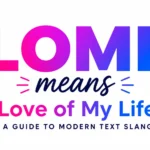
LOML stands for: Love of My Life
It’s used to describe someone you deeply love, admire, or feel strongly connected to.
Simple breakdown:
- 💬 Full form: Love of My Life
- 💬 Tone: Emotional, affectionate, sometimes playful
- 💬 Usage: Romantic partners, close friends, even pets (yes, really)
Example usage:
- “I can’t believe I found you. You’re the LOML ❤️”
- “This pizza is the loml, not even joking.”
- “She’s literally the loml and she doesn’t even know it.”
Notice how it can swing between serious and lighthearted depending on context.
Origin & Background
LOML didn’t just appear overnight. It evolved from a phrase that has been used for decades in literature, movies, and songs—“love of my life.”
Before texting culture, people used the full phrase in deeply emotional settings. It signaled commitment, devotion, and long-term love.
Then came:
- SMS texting limits
- Social media captions
- Fast-paced messaging
And naturally, the phrase got shortened.
Platforms like Instagram, TikTok, and messaging apps accelerated its popularity. Influencers started using it in captions, often casually, which softened its original intensity.
Over time, LOML transformed:
- From serious lifelong love
- To flexible emotional expression
Now, it can mean anything from true love to temporary obsession—and that’s where the confusion begins.
Real-Life Conversations
Here’s how LOML actually shows up in everyday conversations:
WhatsApp Chat
Person A: I finally met him today
Person B: And??
Person A: I think he’s the loml 😭
Instagram DMs
Person A: That outfit???
Person B: Stoppp 😭
Person A: You’re the loml fr
TikTok Comments
User 1: This song hits different
User 2: It’s the loml, no debate
Text Messages
Person A: You remembered my favorite coffee?
Person B: Of course
Person A: That’s why you’re the loml ❤️
These examples show how emotional—but also flexible—the phrase is.
Emotional & Psychological Meaning
LOML isn’t just a phrase—it’s an emotional shortcut.
When someone uses it, they’re often expressing:
- Deep affection
- Admiration
- Emotional attachment
- A moment of intensity
It reflects how modern communication prioritizes feeling over formality. Instead of writing long emotional messages, people compress everything into a few letters.
Why people use it:
- It feels intimate but effortless
- It adds emotional depth without sounding overly serious
- It creates a sense of closeness quickly
Real-life scenario:
Imagine someone you care about does something small but meaningful—like remembering your favorite snack after a long day. You could write a paragraph… or just say, “you’re the loml.”
It captures the feeling instantly.
Usage in Different Contexts
1. Social Media
Often used in captions:
- Romantic posts
- Friendship appreciation
- Even humor (“coffee is the loml”)
2. Friends & Relationships
- Romantic partners: deep affection
- Best friends: playful love
- Crushes: subtle hint
3. Work / Professional Settings
Avoid it.
It’s too personal and can feel inappropriate in formal communication.
4. Casual vs Serious Tone
- Casual: “This burger is the loml”
- Serious: “You’re the loml, always have been”
Tone depends entirely on context and relationship.
When NOT to Use It
There are moments where LOML can backfire.
Avoid using it:
- In professional emails or workplace chats
- With someone you don’t know well
- Too early in a relationship (can feel overwhelming)
- In emotionally sensitive situations where clarity matters
Why?
Because it can come across as:
- Too intense
- Insincere
- Misleading
Context is everything.
Common Misunderstandings
1. It always means “true love”
Not necessarily. Sometimes it’s exaggerated or playful.
2. It guarantees commitment
It doesn’t. Someone might say LOML casually without deep intent.
3. It’s always romantic
Wrong. People use it for friends, pets, food—even memes.
4. Tone confusion
Text lacks tone. “loml” can feel sincere or sarcastic depending on context.
Comparison Table
| Expression | Meaning | Tone | Usage |
| LOML | Love of my life | Emotional / flexible | Romantic, playful |
| BAE | Before anyone else | Casual | Relationships |
| MY PERSON | Deep emotional bond | Warm, personal | Close friendships |
| SOULMATE | Deep spiritual connection | Serious | Long-term love |
| FAVORITE HUMAN | Affectionate | Light | Friends/partners |
| IDC | I don’t care | Opposite tone | Indifference |
Key Insight
LOML sits in a unique space—it can feel as deep as “soulmate” or as casual as “favorite.” The difference lies entirely in how and when it’s used.
Variations / Types
Here are common variations and related expressions:
- loml ❤️ – Adds emotional emphasis
- ur the loml – Direct and personal
- lowkey loml – Subtle affection
- loml fr – “for real,” adds sincerity
- future loml – Hopeful or flirty
- loml energy – Describing someone’s vibe
- temporary loml – Playful exaggeration
- loml vibes – Emotional aesthetic
- loml material – Someone worth loving deeply
- actual loml – Reinforces seriousness
Each variation shifts tone slightly.
How to Respond When Someone Uses It
Casual replies
- “Stop it 😭”
- “You’re too sweet”
Funny replies
- “Don’t tell my other loml”
- “I knew it 😎”
Mature replies
- “That means a lot, thank you”
- “I really appreciate you”
Respectful replies
- “You’re important to me too”
- “That’s kind of you to say”
Your response should match the relationship and tone.
Regional & Cultural Usage
Western Culture
Commonly used casually, even jokingly.
Asian Culture
Used more carefully; emotional expressions are often more reserved.
Middle Eastern Culture
Strong emotional phrases carry weight—LOML may feel more serious.
Global Internet Usage
Highly flexible—tone depends on platform and audience.
Generational Differences
- Gen Z: Uses it freely, even humorously
- Millennials: More selective, often meaningful
Is It Safe for Kids?
Yes—with context.
It’s not offensive, but it does express emotional attachment. Younger users may use it casually without fully understanding its depth.
Parents and educators should focus on helping kids understand emotional communication, not restricting harmless slang.
FAQs
1. Does LOML always mean romantic love?
No. It can also be used for friends, pets, or even things.
2. Can LOML be used sarcastically?
Yes. Tone depends on context.
3. Is LOML stronger than “I love you”?
Sometimes—it can feel more intense, depending on usage.
4. Can you use LOML early in a relationship?
You can, but it may come across as too strong.
5. What’s the difference between LOML and soulmate?
Soulmate is deeper and more serious; LOML can be casual.
6. Is LOML popular on TikTok?
Yes, especially in captions and comments.
7. Can LOML refer to things?
Absolutely—food, music, or hobbies.
Conclusion
LOML is one of those phrases that says a lot with very little.
At its core, it means “love of my life.” But in real conversations, it’s more flexible than that. It can be deeply emotional, casually playful, or somewhere in between.
What matters most is context.
Used thoughtfully, it can make someone feel appreciated, seen, and valued in a way that long sentences sometimes can’t achieve.
So the next time you type “loml,” you’ll know exactly what you’re expressing—and why it matters.