
If you’ve ever scrolled through social media or text messages and seen someone type “GMFU”, you might have paused, wondering what in the world it actually means.
Is it compliment? A complaint? A secret code?
People are searching for this because slang moves faster than ever, and misunderstandings can lead to awkward messages or even faux pas in conversations.
This article breaks down what GMFU means in a way that feels human, clear, and honest — the kind of explanation you’d get from a friend who actually uses slang in real life.
Let’s dive in.
what do gmfu mean – Quick Meaning
Clear Definition
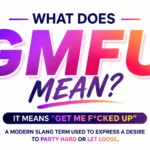
At its core, GMFU stands for:
👉 “Got Me F*ed Up”**
Don’t worry — we’ll unpack that in a respectful and easy‑to‑understand way.
It’s usually used to express:
- Shock
- Confusion
- Frustration
- Disbelief
Depending on tone and context.
Quick Examples
“You want me to pay extra for a mistake that wasn’t even mine? GMFU!”
“They canceled the show last minute again? GMFU.”
“He said he’d be here at 5… it’s 7. GMFU.”
In each case, it intensely conveys the speaker’s emotional reaction.
Origin & Background
Where It Came From
Slang often grows out of spoken language, and GMFU emerged from hip‑hop communities and online youth culture.
It became popular because it expresses a strong reaction in a compact way — perfect for texts and tweets.
Cultural Influence
Words and acronyms like GMFU spread fast through:
- Rap lyrics
- Instagram captions
- TikTok trends
- Group chats
Once a few influencers or creators use it, others pick it up.
Social Media Impact
Platforms like TikTok and Twitter accelerated its usage.
People saw it, imitated it, and soon “GMFU” jumped into everyday conversation.
Slang doesn’t need a dictionary to thrive — people just use it.
How Meaning Evolved
At first, GMFU was pretty negative.
Now, it can also mean:
- “You surprised me!”
- “I do not agree.”
- “You’re confusing me!”
So context matters.
Real‑Life Conversations (MANDATORY)
WhatsApp Chat
Person A: Yo, I just woke up and the project deadline moved up.
Person B: Wait… what? That’s insane.
Person A: I know right? Honestly, GMFU.
Instagram DMs
Person A: They’re selling those shoes for triple the price again.
And,
Person B: Bruh, retail just dropped them last week!
Person A: I’m telling you — GMFU.
TikTok Comments
Commenter 1: They say pineapple belongs on pizza.
Commenter 2: That’s 😩 GMFU 🍍🍕
Text Message
Person A: I told him three times.
And,
Person B: Still late?
Person A: Yup. GMFU.
Emotional & Psychological Meaning
What Emotion It Expresses
GMFU carries emotion first — it’s a reaction before a phrase.
It signals:
- Exasperation
- Disbelief
- Shock
- Annoyance
- Sometimes amusement
It’s not just saying “I disagree.” It’s feeling the disagreement.
Why People Use It
We use short expressions like this because:
- They save time
- They pack emotion
- They create community (shared language)
- They feel real in digital communication
In a world where texting often lacks tone, slang fills the emotional gap.
Psychological Insight
When someone types GMFU, they’re not just describing confusion — they’re sharing an emotional snapshot.
It’s a quick way to say:
“This hit me so hard… I don’t even know how to respond.”
Personal Scenario
I once saw a friend type GMFU after learning his favorite café doubled their prices overnight. It wasn’t lazy language. It was pure incredulity — a mix of frustration and disbelief in three syllables.
Usage in Different Contexts
Social Media
On platforms like TikTok or Twitter, GMFU thrives as a reaction phrase:
- Short
- Relatable
- Expressive
People pair it with memes, gifs, or reaction videos.
Friends & Relationships
Texting with friends? GMFU fits when something shocks you.
For example:
“She said she’s ‘not into birthdays’… on their own birthday. GMFU.”
It sounds natural among people who already understand each other’s tone.
Work / Professional Settings
Be careful.
In emails or formal chats, using GMFU could be seen as unprofessional or unclear.
Instead, save it for casual messages or internal team banter (if the team is comfortable with slang).
Casual vs Serious Tone
Casual:
“They changed the playlist again? GMFU 😂”
Serious:
“That’s a huge fee increase… GMFU.”
Tone shifts meaning significantly.
When NOT to Use It
Inappropriate Contexts
Don’t use GMFU when:
- Speaking to someone you don’t know well
- In professional or formal settings
- When clarity is crucial
People can misinterpret it as rude or dismissive.
Cultural Sensitivity
Be mindful: Not everyone knows slang, and some may find it offensive or disrespectful if misunderstood.
Always consider your audience.
Situations Where It May Cause Misunderstanding
- With older adults unfamiliar with internet slang
- In serious emotional conversations
- In multilingual contexts where acronyms don’t translate
If someone doesn’t know what it means, they might think you’re upset at them personally.
Common Misunderstandings
What People Get Wrong
Some people mistakenly think GMFU means:
- “Good Mood For You”
- Something positive
- A friendly greeting
It’s actually not uplifting.
Tone Confusion
If typed without context, it can seem:
- Aggressive
- Rude
- Ambiguous
Always pair it with tone indicators, emojis, or clarifying context when in doubt.
Literal vs Figurative Meaning
Literal?
No one uses it to describe physical injury.
Figurative?
Yes — mental overload, disbelief, and emotional reaction.
Comparison Table
| Expression | Meaning | Usage Tone | Example |
|---|---|---|---|
| GMFU | Shock & confusion | Casual/Nuetral | “They canceled again? GMFU.” |
| SMH (Shaking My Head) | Disapproval | Mild | “SMH… why?” |
| WTF | Strong surprise | Intense | “WTF just happened?!” |
| IDK | Lack of knowledge | Neutral | “IDK what to do.” |
| LOL | Laughter | Light | “LOL that was funny.” |
Key Insight
Slang expressions carry emotional weight beyond literal meanings. While LOL just means laughter, GMFU expresses a blend of frustration and disbelief — a more complex emotional snapshot in fewer letters.
Variations / Types (Minimum 8–10)
GMHU — “Got Me Hyped Up”
Expresses excitement rather than frustration.
GMFO — “Got Me Fussed Over”
Used when someone over‑explains or overwhelms.
GMFW — “Got Me F***ed With”
Similar in meaning, often interchangeable.
GFU — “Got F***ed Up”
Shorter variant without the personal “me” focus.
GMFA — “Got Me Freaking Annoyed”
A toned‑down but similar emotional expression.
GMFU 😩
The emoji adds emotional emphasis.
GMFU 😂
Used sarcastically, often humorous.
GMFU 😐
Flat emotional response, less intense.
GMFUU — Extended for emphasis
More emphasis than standard GMFU.
GMFU?!
With punctuation — expresses surprise beyond frustration.
How to Respond When Someone Uses It
Casual Replies
- “I feel that 😅”
- “Right???”
Funny Replies
- “Same energy 😂”
- “Plot twist of the century.”
Mature Replies
- “That sounds stressful.”
- “I get why you feel that way.”
Respectful Replies
- “Thanks for being honest.”
- “I hear you — that is frustrating.”
Regional & Cultural Usage
Western Culture
Used widely among young people in the U.S., U.K., and Canada.
It’s common in online spaces first, then spills into spoken conversation.
Asian Culture
Some areas adopt it via K‑pop, anime fandoms, and YouTubers.
Still less common in everyday offline speech, but growing.
Middle Eastern Culture
Slang adapts — some use GMFU online, but often alongside regional expressions.
Context matters heavily.
Global Internet Usage
On global platforms, people learn GMFU through exposure, comments, and trends.
Generational Differences
- Gen Z: Uses it frequently and with creative twists.
- Millennials: Recognize it but may not use it as often.
- Older generations: Often confused by it.
Is It Safe for Kids?
Short Explanation with Context Awareness
Many kids see slang early — through TikTok, Instagram, and YouTube.
But GMFU includes a strong implied profanity.
Parents or educators might prefer teaching kids what it stands for so they understand without repeating it.
Use caution — it’s not harmfully dangerous, but it’s not kid‑friendly language either.
FAQs
What does GMFU stand for?
It stands for “Got Me F**ed Up*,” expressing disbelief, shock, or frustration.
Is GMFU rude?
It can feel rude if misread, but it’s mostly slang expressing emotion — tone and context matter.
Can I say GMFU in a text to a friend?
Yes, if your friend understands slang and your relationship is casual.
Should I use GMFU in professional messages?
It’s best to avoid it in formal or professional communication.
Is GMFU positive or negative?
Typically negative or neutral, depending on how it’s used.
Does GMFU have other meanings?
Not officially — most meanings stem from emotional expression in digital communication.
Conclusion
At first glance, what do GMFU mean might seem confusing — a random jumble of letters.
But once you feel how it’s used in real conversations, you’ll see its purpose.
It’s not just slang — it’s emotional shorthand. It gives voice to reactions that otherwise need several sentences to express.
Use it wisely, with care for your audience.
And next time someone texts GMFU, you’ll know exactly how to respond — confidently and naturally.