
If you spend any time texting, scrolling through social media, or chatting online, you’ve probably seen someone reply with “TMI.” Sometimes it appears after an awkward confession. Other times, it shows up jokingly in group chats when someone overshares a little too much information.
But what does TMI mean in text exactly?
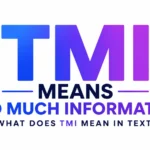
At its core, TMI stands for “Too Much Information.” It’s a quick way to tell someone they shared details that feel overly personal, unnecessary, embarrassing, or uncomfortable for the conversation.
The phrase has become deeply woven into modern digital communication because people today share more online than ever before. From relationship drama to medical updates to emotional venting, social platforms encourage openness. TMI exists as a social boundary marker — a humorous or serious signal that someone may have crossed a conversational line.
People search this term because context matters. Sometimes TMI is playful and harmless. Other times, it can sound rude, dismissive, or even emotionally insensitive. Understanding the tone behind it helps avoid misunderstandings in friendships, dating, work conversations, and online communities.
What Does TMI Mean in Text? – Quick Meaning
Simple Definition
TMI means:
- Too Much Information
- Used when someone shares details that feel overly personal, graphic, awkward, or unnecessary
- Often said jokingly, but sometimes seriously
How People Usually Use It
People use TMI when someone:
- Describes private body-related details
- Shares intense emotional oversharing
- Gives unnecessary personal updates
- Reveals embarrassing stories in public chats
Short Text Examples
“I didn’t need to know that. TMI 😂”
“Bro… absolute TMI.”
“Okay that’s definitely TMI for a Monday morning.”
Tone Matters
TMI can sound:
- Funny
- Playful
- Shocked
- Embarrassed
- Annoyed
- Uncomfortable
The emotional tone depends entirely on the relationship and context.
Origin & Background
Where Did TMI Come From?
The phrase “Too Much Information” existed long before texting culture. People used it casually in conversations during the late 20th century when someone revealed uncomfortable personal details.
However, the abbreviation “TMI” exploded during the early internet era, especially in:
- Chat rooms
- Forums
- Blogging culture
- Instant messaging apps
- Early social networking sites
By the 2000s, it became a mainstream internet expression.
The Influence of Social Media
Social media changed how openly people shared their lives. Platforms rewarded emotional openness, daily updates, and raw honesty.
As online oversharing increased, TMI became more common because users needed a fast way to react to uncomfortable content.
Today, you’ll see it everywhere on:
- TikTok
- Snapchat
- X
How the Meaning Evolved
Originally, TMI mostly referred to graphic or bodily details.
Now it can also mean:
- Emotional oversharing
- Excessive relationship drama
- Financial oversharing
- Trauma dumping
- Social awkwardness
Modern communication has expanded the phrase far beyond its original meaning.
Real-Life Conversations
WhatsApp Conversation
Person A:
“I accidentally sent my ex a voice note while crying in the bathroom.”
Person B:
“OMG 😭 TMI but also… are you okay?”
Instagram DM
Person A:
“I haven’t washed my hair in five days because I’m emotionally exhausted.”
Person B:
“That’s low-key relatable but also TMI 😂”
TikTok Comments
Person A:
“My stomach started making weird sounds during my date.”
Person B:
“TMI but this is the funniest thing I’ve read today.”
Text Message Conversation
Person A:
“I think I ate something bad because I’ve been in the bathroom all morning.”
Person B:
“PLEASE. TMI.”
These examples show how TMI often mixes humor with mild discomfort rather than outright judgment.
Emotional & Psychological Meaning
What Emotion Does TMI Express?
TMI usually expresses emotional overload.
It signals:
- “I wasn’t prepared to hear that.”
- “That feels too personal.”
- “This conversation crossed a comfort boundary.”
- “I’m uncomfortable but trying to stay polite.”
Sometimes it’s playful teasing between close friends. Other times, it protects emotional distance.
Why People Use It
People use TMI because modern communication moves quickly. Instead of writing a long explanation, “TMI” instantly communicates discomfort or surprise.
It can also help people:
- Set boundaries
- Avoid awkwardness
- Lighten uncomfortable moments with humor
- Redirect conversations
What It Reveals About Modern Communication
TMI reflects something interesting about digital culture: people crave authenticity but still expect social limits.
Online spaces encourage openness, yet audiences still mentally decide what feels “appropriate” to share publicly.
That tension is exactly why TMI remains popular.
A Realistic Scenario
Imagine sitting with friends during lunch when someone suddenly starts describing a medical issue in graphic detail.
Everyone laughs nervously.
One person finally says:
“Okay, TMI.”
The phrase works because it softens the discomfort without starting conflict.
Usage in Different Contexts
Social Media
On social media, TMI is often playful.
People comment it under:
- Oversharing TikToks
- Emotional confession posts
- Relationship stories
- Embarrassing personal experiences
Sometimes creators intentionally post “TMI content” because audiences enjoy raw honesty.
Friends & Relationships
Among friends, TMI can actually signal closeness.
Close friends often overshare because they feel emotionally safe with each other.
Examples include:
- Dating disasters
- Health struggles
- Family drama
- Personal insecurities
In relationships, playful TMI moments can build intimacy.
Work & Professional Settings
TMI becomes riskier in professional environments.
Oversharing at work can create:
- Awkwardness
- Boundary issues
- Professional discomfort
For example:
“I was crying for three hours after my breakup.”
A coworker may politely smile but internally think: “That’s TMI.”
Casual vs Serious Tone
TMI can sound lighthearted:
“Eww TMI 😂”
Or serious:
“That’s a bit TMI for work.”
The tone completely changes the emotional impact.
When NOT to Use It
During Emotional Vulnerability
Avoid saying TMI when someone is genuinely struggling emotionally.
If someone opens up about:
- Anxiety
- Depression
- Grief
- Trauma
Calling it TMI may feel dismissive or cruel.
In Professional Conflicts
Using TMI sarcastically during serious discussions can appear disrespectful.
Around Cultural Sensitivities
Some cultures value emotional openness differently.
What feels normal in one community may feel deeply inappropriate in another.
When Someone Needs Support
If someone is reaching out for help, empathy matters more than discomfort.
Instead of saying “TMI,” consider:
- “I’m sorry you’re dealing with that.”
- “That sounds difficult.”
- “Do you want to talk about it?”
Common Misunderstandings
Thinking TMI Always Means “Gross”
Not necessarily.
TMI can refer to:
- Emotional details
- Financial issues
- Relationship drama
- Personal habits
It’s broader than just bodily information.
Assuming It’s Always Rude
Friends often use TMI jokingly.
In many conversations, it’s affectionate teasing rather than criticism.
Confusing Honesty With Oversharing
Being open and being excessive are different things.
Healthy honesty builds connection. Oversharing sometimes overwhelms people emotionally.
Literal vs Figurative Meaning
Sometimes people say “TMI” dramatically for humor even when the information isn’t truly excessive.
Example:
“I saw my teacher at the grocery store.”
“TMI 😂”
In this case, it’s just playful exaggeration.
Comparison Table
| Expression | Meaning | Tone | Similarity to TMI |
|---|---|---|---|
| TMI | Too Much Information | Awkward/funny | Main expression |
| Oversharing | Sharing excessively personal details | Serious | Very similar |
| Trauma dumping | Emotionally unloading intensely | Heavy/emotional | More serious |
| Spill the tea | Share gossip/details | Excited/playful | Opposite direction |
| Keep it private | Don’t share publicly | Serious | Related boundary |
| IDC | I don’t care | Dismissive | Less polite |
| Too personal | Crossing privacy boundaries | Direct | Similar meaning |
| NSFW | Not safe for work | Warning-based | Different usage |
Key Insight
TMI isn’t always about the information itself. Often, it’s about timing, audience, and emotional comfort. The same story may feel funny with close friends but inappropriate in a professional meeting.
Variations / Types
TMI Alert
A playful warning before oversharing.
Major TMI
Used when something feels especially uncomfortable.
Slight TMI
A softer version suggesting mild oversharing.
Sorry for the TMI
An apology after revealing personal details.
TMI Moment
Refers to an awkward oversharing incident.
That Was TMI
A direct reaction after hearing something uncomfortable.
TMI Energy
Describes someone constantly oversharing.
Emotional TMI
Refers to deep emotional oversharing.
Medical TMI
Used for graphic health-related details.
Relationship TMI
Used when couples share excessive romantic or private details.
How to Respond When Someone Uses It
Casual Replies
- “Fair enough 😂”
- “Okay maybe I overshared.”
- “You’re right, my bad.”
Funny Replies
- “You’ll survive.”
- “Character development.”
- “I believe in honesty.”
Mature Replies
- “Sorry, I didn’t realize that was too personal.”
- “Thanks for letting me know.”
- “I understand.”
Respectful Replies
- “I appreciate the boundary.”
- “I’ll keep it lighter.”
- “Didn’t mean to make anyone uncomfortable.”
Regional & Cultural Usage
Western Culture
In many Western countries, TMI is extremely common and often humorous.
People use it casually among friends and online communities.
Asian Culture
Some Asian cultures traditionally value privacy and emotional restraint more strongly.
As a result, TMI situations may feel more socially uncomfortable.
Middle Eastern Culture
In Middle Eastern communities, personal and family privacy is often highly respected.
Oversharing publicly can sometimes be viewed as inappropriate or attention-seeking.
Global Internet Usage
Online culture has made TMI globally recognizable, especially among younger users.
Even non-native English speakers commonly understand the term.
Generational Differences
Gen Z
Gen Z often embraces emotional openness and ironic oversharing.
They may use TMI humorously and casually.
Millennials
Millennials typically use TMI in a more traditional way to point out awkward oversharing.
Older generations may use the phrase less frequently overall.
Is It Safe for Kids?
Understanding the Context
TMI itself is generally harmless.
It’s not offensive language.
However, children should understand:
- Digital boundaries
- Online privacy
- Appropriate sharing
- Emotional safety online
Teaching kids when personal information should remain private is more important than the slang itself.
FAQs
What does TMI stand for in texting?
TMI stands for “Too Much Information.” It’s used when someone shares overly personal or uncomfortable details.
Is TMI rude?
Not always. Among friends, it’s often playful. In serious situations, though, it can sound dismissive.
What does TMI mean from a girl or guy?
The meaning stays the same regardless of gender. Tone and relationship context matter more than who says it.
Can TMI be flirtatious?
Sometimes. Playful oversharing can create intimacy between people who feel comfortable with each other.
Is TMI only used online?
No. People also say it in face-to-face conversations, phone calls, and casual discussions.
Why do people overshare online?
People often overshare because social media encourages emotional openness, validation, and personal storytelling.
What’s the difference between honesty and TMI?
Honesty communicates openly while respecting boundaries. TMI crosses comfort limits by sharing unnecessary personal details.
Conclusion
TMI may look like a simple internet abbreviation, but it reflects something deeply human about communication in the digital age.
People want connection, honesty, and emotional openness. At the same time, everyone has different comfort levels when it comes to personal information. That’s why the phrase continues to thrive across texts, memes, social media, and everyday conversations.
Understanding what TMI means in text isn’t just about slang. It’s about reading emotional tone, respecting boundaries, and recognizing how modern relationships work online.
Used playfully, it can make conversations funny and relatable. Used carelessly, it can make someone feel embarrassed or dismissed.
The key is awareness.
Once you understand the emotion behind the phrase, you can use it naturally, confidently, and respectfully in real conversations.